
When someone you love dies, your whole world tilts in a single moment.
One minute you’re doing ordinary things… talking, working, running errands, feeling more or less steady. Then the phone rings, or a message pops up, and everything inside you changes. It’s like the floor drops out from under you.
Before that moment, your nervous system might be in what I’d call a state of safety and social engagement. You’re in your rhythm, connected, functioning. Then suddenly, your body bolts into high alert. That’s what gets called sympathetic activation.
For some, that shows up as anxiety.For others, it comes out as anger, not always anger at God, though that happens, but a general anger at everything and nothing. It can feel like panic, restlessness, or just this sense that you cannot sit still inside your own skin. Your heart races, your breath goes shallow, and there’s this desperate urge to do something, anything, just to get away from what you’re feeling.
If that intense state isn’t held, supported, or cared for, if no one is really with you, physically or emotionally, many of us slide into what polyvagal theory calls the dorsal vagal state.
I usually just call it shutdown.
I don’t describe it from a textbook. I describe it from my own life. You may feel numb, disconnected from your surroundings, like everything is far off or unreal. You may feel a bone deep exhaustion that sleep does not fix. Depersonalization can show up alongside depression, like a rider on a horse, and you may feel as if you’re watching your own life from a distance, instead of living it.
I have lived this myself.
When my parents died five months apart, and through the narcissistic and reactive abuse I went through in my marriage, I have felt the full range of these states. I have gone from the shock and frantic energy of sympathetic activation into the heaviness and collapse of dorsal vagal shutdown. I know what it is to be buzzing on the inside one day and barely able to move the next.
Some people argue about polyvagal theory on a scientific level. I understand that debate. At the same time, I believe our lived experience matters. We know what we feel in our bodies and minds. Many of us keep track of it in journals, diaries, computer notes, picture books, or voice recordings. These personal records have value. They show patterns worth noticing.
From my own journals, from listening to people, and from many years of standing with grieving families, I see what I would call dorsal vagal shutdown. I’ve watched people go from active, engaged functioning into emotional and physical collapse after a loss. I don’t think this is “just in our heads.” I believe it reflects something real in how our nervous system responds when life hits too hard and too fast.
What I’m learning, and what I want to share with you, is that these states can help us move through grief instead of trapping us inside it.
When you’re in sympathetic activation, start by simply noticing it. Notice the racing heart, the shallow breath, the urge to act. Instead of judging yourself, you can say, “My body is trying to protect me. It’s responding to danger.”
That awareness is a first step. From there, you can gently calm your system with slow breathing, grounding practices, or by reaching out to someone you trust, someone who can sit with you and not be scared of your pain.
When you find yourself in dorsal vagal shutdown, numb, exhausted, disconnected you can again notice what’s happening and say, “This is my body’s way of saying this is too much. It’s trying to preserve energy.”
Instead of forcing yourself to “snap out of it” or “get over it,” you can offer your body small, kind signals of safety: soft light instead of harsh brightness, simple comforting routines, gentle movement, or the quiet presence of someone you trust.
Never bully yourself to snap out of it. Never shame yourself for not “moving on.” Grief doesn’t work on a schedule.
Little by little, with kindness and patience, your system can move back toward a state of safety and connection. Not because you forget the person you lost, but because your body learns that it can survive this, even if it hurts like nothing you’ve ever known.
These ideas are not just theory for me.
I grew up around death and grief in a direct and daily way. My parents owned funeral homes. I have been to more than seven hundred fifteen funerals. I have stood beside families in their worst moments, felt the weight of their emotions, and used my sensitivity to help them carry what felt unbearable. I’ve done the hair and makeup to try to create a last look of love. I’ve spent years swimming deep in those waters.
I live with strong cognitive empathy and affective empathy. At times, it’s like tying yourself to a bull in a pasture. The emotions are powerful and intense. They throw you around. It’s a struggle. It’s real. It helps, and it also exhausts. You don’t walk away from that kind of work untouched.
But in all of that, I have seen over and over how our bodies respond to loss, and how deeply people long for compassionate help someone who doesn’t back away from their pain or try to fix it too fast.
What I’m sharing here isn’t tied to one faith tradition. I am a person of faith, and many people around me process grief through Christianity, but we all live in human bodies, governed by the same nervous systems. We all breathe the same air and hurt in some of the same ways.
My hope is to honor the reality of these states of safety, activation, and shutdown, while reminding you that none of them is wrong and none of them is permanent. They are responses. When we understand them, we can work with them. We can let them carry us through the waves of grief, instead of holding us under.
And if you’re in one of those states right now, you’re not broken. You’re a human being whose body is doing everything it knows to do to survive something that feels unbearable.

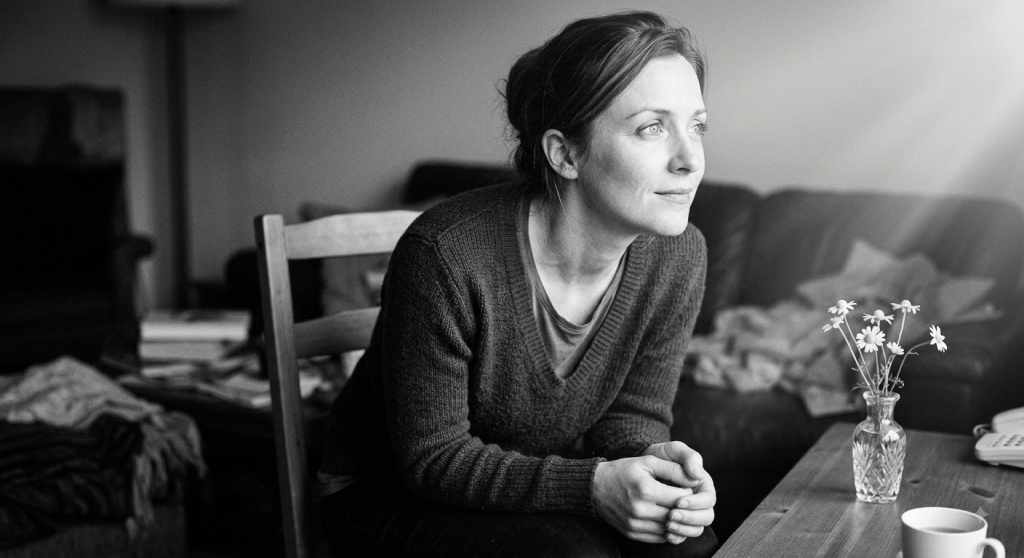
 Seeing through the eyes of others
You must be logged in to post a comment.